
Ireland1 has never been an easy place for rugby league to grow. In a country saturated with sporting traditions — from Gaelic games to rugby union — league has always existed on the margins, sustained by committed volunteers, players, and administrators rather than headlines or funding. Yet despite those challenges, the sport has carved out a continuous presence on the island for almost three decades, producing international players, domestic competitions, and a community that has repeatedly rebuilt itself in the face of adversity.
The ubiquity of rugby union leaves our fair (and superior, at least in this humble writer’s opinion) code of the game out in the cold in the Emerald Isle; in fact, the country hasn’t been a full member of the International Rugby League (IRL) since 2024. What’s more, they won’t feature in this year’s World Cup2 either, the first edition of the competition they will miss since first entering the competition in 2000.
Internationally, the country has long relied on Aussie and English players with Irish heritage, who are eligible to play via the ‘grandparent rule’3. The most recent Ireland squad featured only four players from the domestic league; the rest were assembled from Irish descendant players, such as Huddersfield’s George King and his brother, Toby, of the Warrington Wolves. Their best performance in a World Cup came in 2000, where they were beaten by England in the quarter-final. The Ireland team in that game boasted such talent as Terry O’Connor, Barrie McDermott, Chris Joynt, and the late, great Steve Prescott MBE. Other than that, the pinnacle of Irish rugby league on the international stage has been two second-placed finishes in the European Championship (2004 & 2012). They’re currently ranked 14th in the world by IRL.
A domestic rugby league competition has run on the island since 1997, eight years following the formation of the first club, the Dublin Blues (who produced Super League legend Brian Carney from their amateur ranks). The Blues even featured in the RFL Challenge Cup in 1997 & 1999, losing in the first round on both occasions. Fittingly, the original Irish club also won the inaugural title in 1997 and added a second title in 1999. They ceased to exist in 2008.
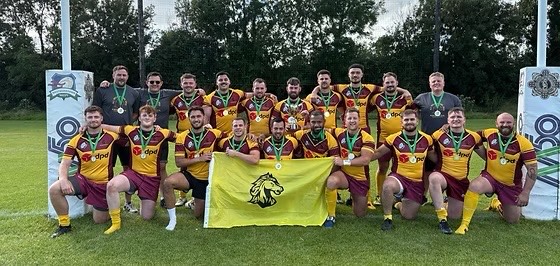
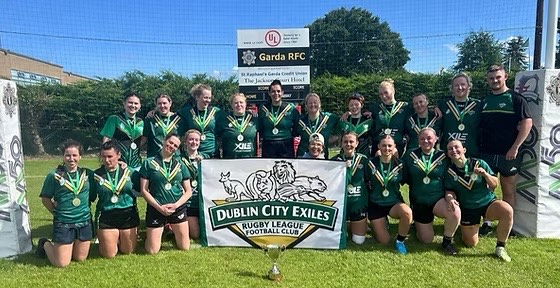
This seems to be the biggest issue with Irish domestic rugby league: the turnover of clubs. Over the years, the competition has expanded and contracted continuously over its nearly three-decade existence. In a stark example of this, the record holders for most RLI Premiership titles won, the Treaty City Titans4, no longer compete in the competition. The league has been down to five teams for the past five seasons, with two Dublin teams (the Exiles and Longhorns, the latter of which regularly compete in the Challenge Cup), a Galway team (the Tribesmen), a Cork team (the Bulls), and one from the North (Banbridge Broncos).
The problem, as a correspondent involved with rugby league in Ireland put it to me, was: “…the irrepressible strength of union in the country. We’ve traditionally relied on union players on their summer break looking for fitness. As the professional game expanded here, big clubs have been increasingly unwilling to release their best players and the [union] season has gradually expanded over the years too.”
Not helping the sports case was a fragile infrastructure and administrative missteps. The same correspondent describes a “very turbulent time” from just before the COVID pandemic. In 2018, the RLI board was ousted in “something of a hostile takeover”. The new board and its chairman (who seemingly continues to be a thorn in the RLI’s side) left under a cloud not long after, and then, of course, COVID hit, decimating sport participation everywhere, and particularly in the already small community of Irish rugby league, leading to the current situation.
It must be said, though, the outlook is not entirely bleak for the sport we all love in Ireland. The league is hoping to expand with a further two sides announcing recruitment drives in the hope of joining the competition. An under-16s league will be played for the first time ever. This follows on from an under-16 schools game last September, a reflection of the increase in participation at both under-16 and under-19 levels. Plans are also in place for a Masters Origin game later in the year to commemorate the thirtieth anniversary of the first competitive game in Ireland, between the Dublin Blue and Bangor Vikings. The goal for the RLI is, obviously, a return to full member status with the IRL, and they hope these tentative steps forward could lead them to that goal sooner rather than later.
Written by Nathan Major (Site editor & Hull KR fan)
- ‘Ireland’ here refers to the whole island of Ireland, as opposed to the Republic of Ireland ↩︎
- The men’s tournament, that is. The wheelchair team will be at the 2026 World Cup, and as the 3rd ranked team in the world, would be an outside shout to win it too. ↩︎
- Essentially, you can represent a country if at least one grandparent was born there ↩︎
- They won eight league titles between 2005 and 2015 ↩︎
 Gerrim Onside!
Leave a comment